 Andata Lab
Biointerface — Interactive Art Installation
A 2024 sensor-driven interactive installation by ANDATA LAB: living plants wired as capacitive instruments, Kinect input and a real-time TouchDesigner engine driving generative visuals across a multi-screen environment.
Where biology meets the machine.
Biointerface explores the bridge between artificial intelligence, biological data and digital art. Living plants are wired as capacitive sensors, so a visitor's touch — and their own physiology — becomes the input that shapes the visuals.
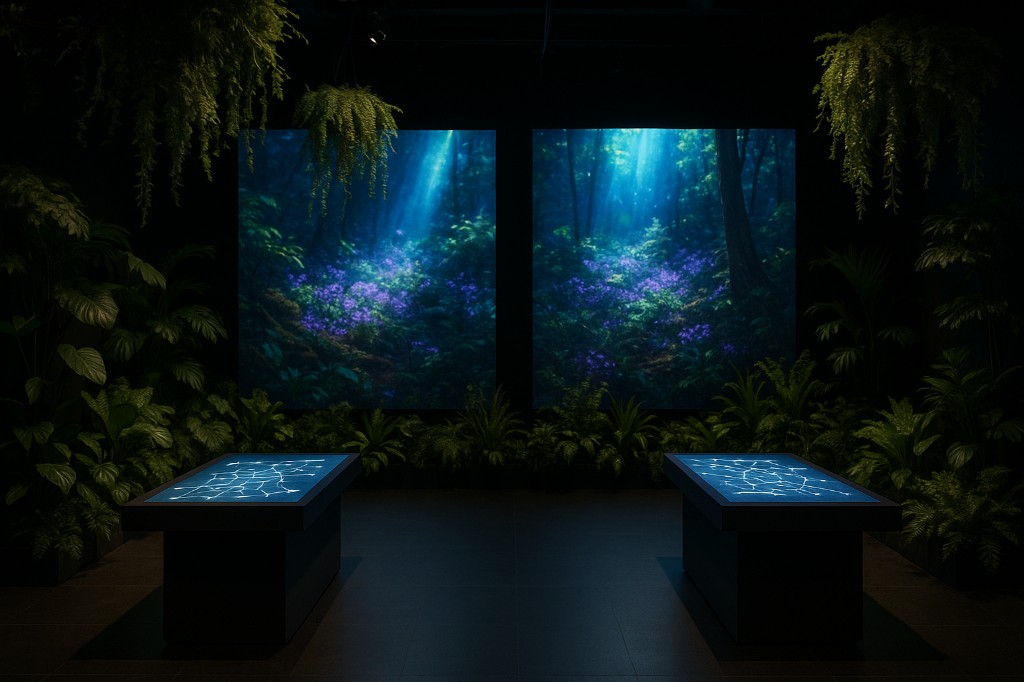
A real-time engine turns that data into a responsive, ever-changing environment projected across a multi-screen canvas — a living dialogue between human, plant and machine.
From touch to visuals, in real time.
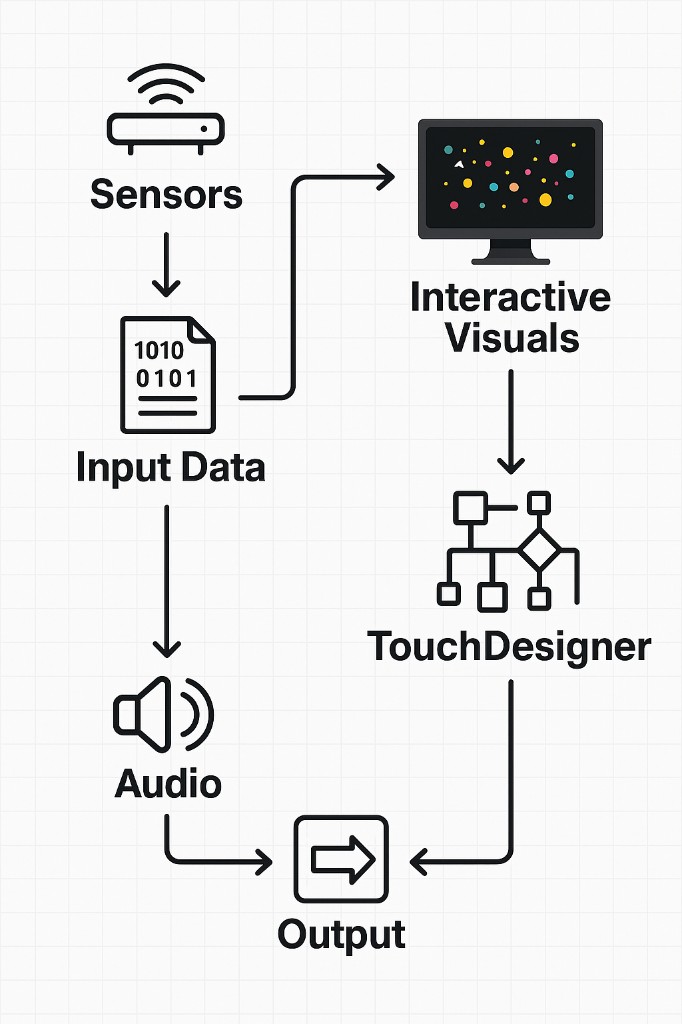
How it was built.
Concept & sensing
Defining the bridge between biological data and digital art — and choosing how to sense it: capacitive touch on living plants, Kinect and camera input.
Sensor system & hardware
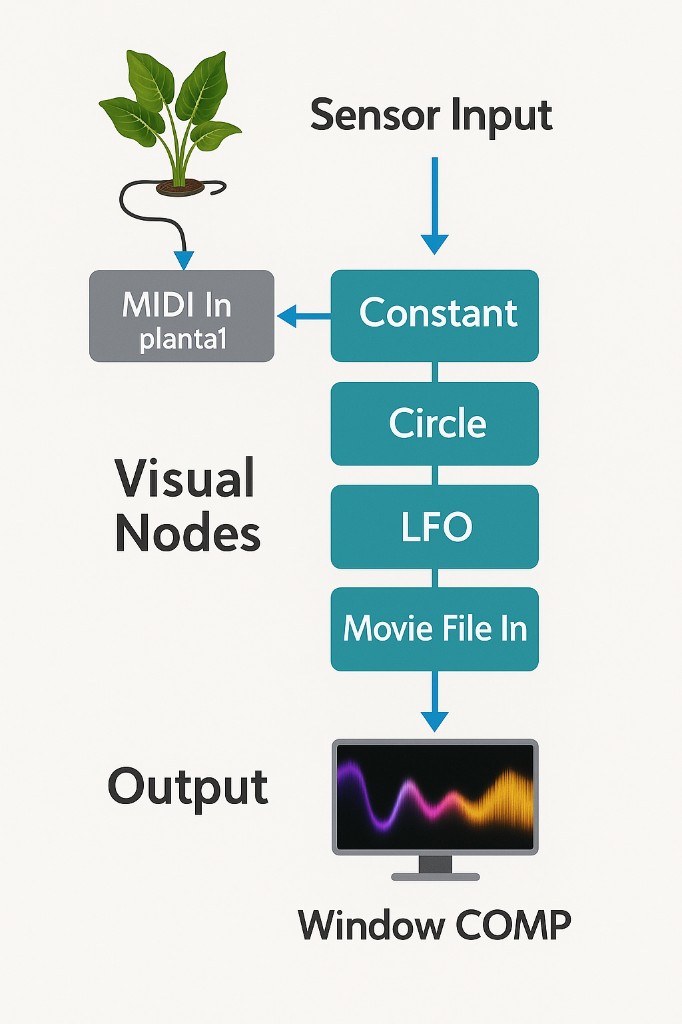
Wiring plants as capacitive inputs through Playtron / Bare Conductive boards, with USB active extensions running back to a second-floor show-control machine.
Real-time engine
A TouchDesigner network — Constant, Circle, LFO, Movie File In — plus a GLSL shader content switcher with noise and feedback, all mapped from sensor and MIDI/OSC data.
Multi-screen mapping
Compositing onto a three-screen canvas (3240 × 1920 px) and routing to LED screens, main screen, floor particles and the AI station via NDI / Spout.
Install & show control
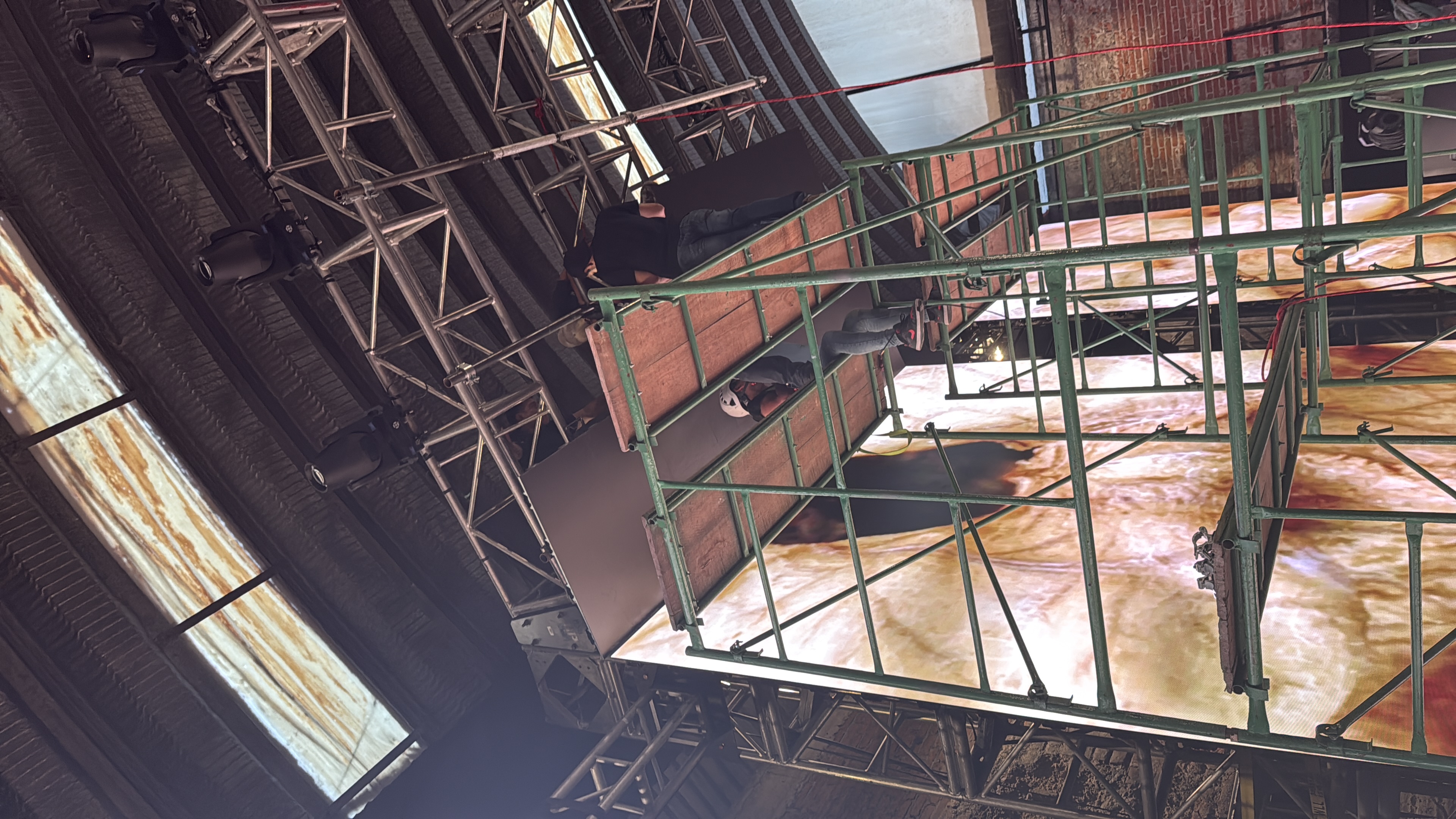
On-site assembly of the touch tables and hanging plants, second-floor show control, calibration and testing with real audiences.
Screens, sensors and wiring.
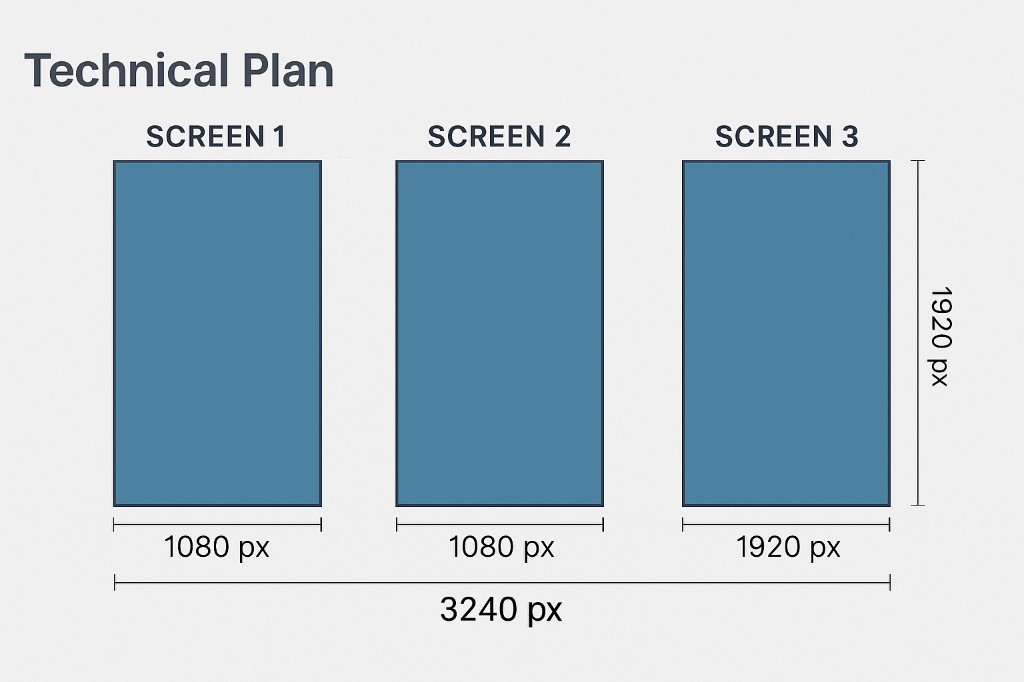
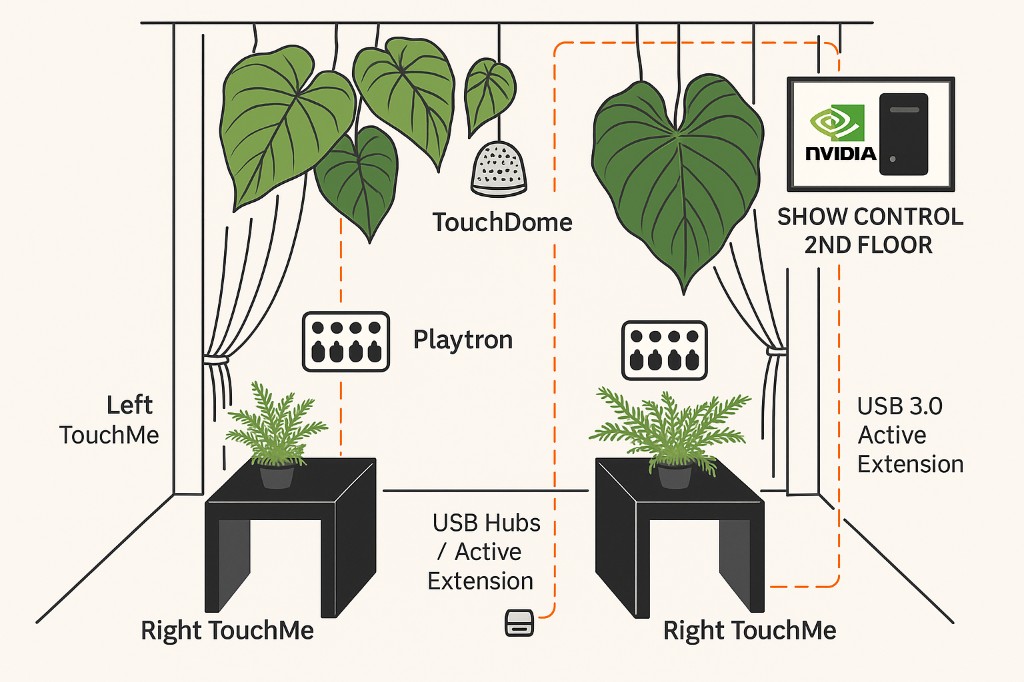
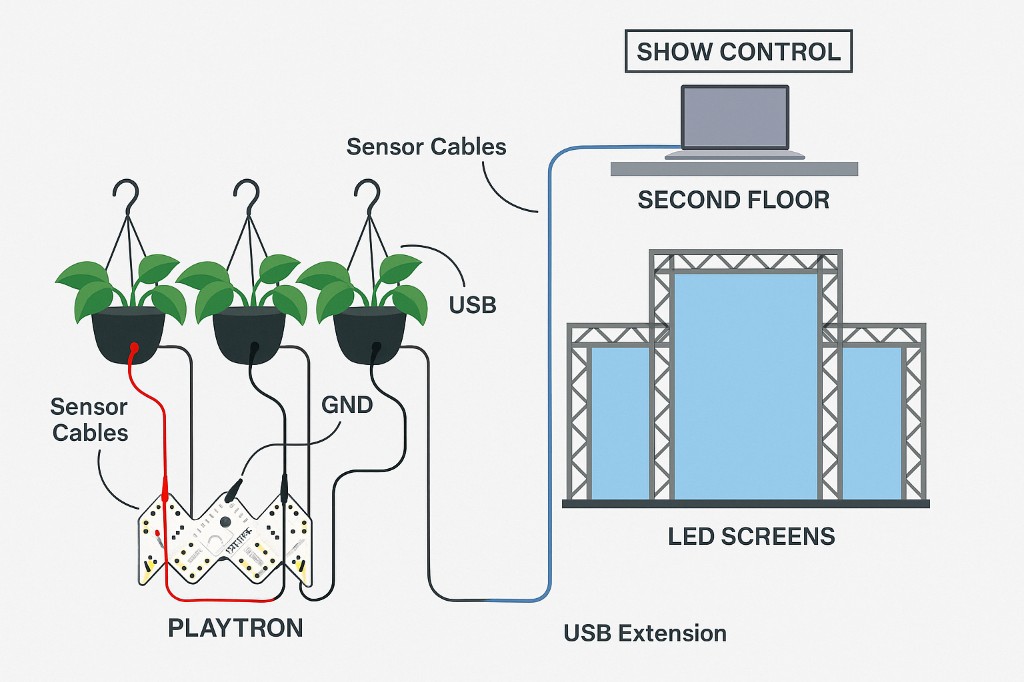
The stack behind Biointerface.
Inside the installation.
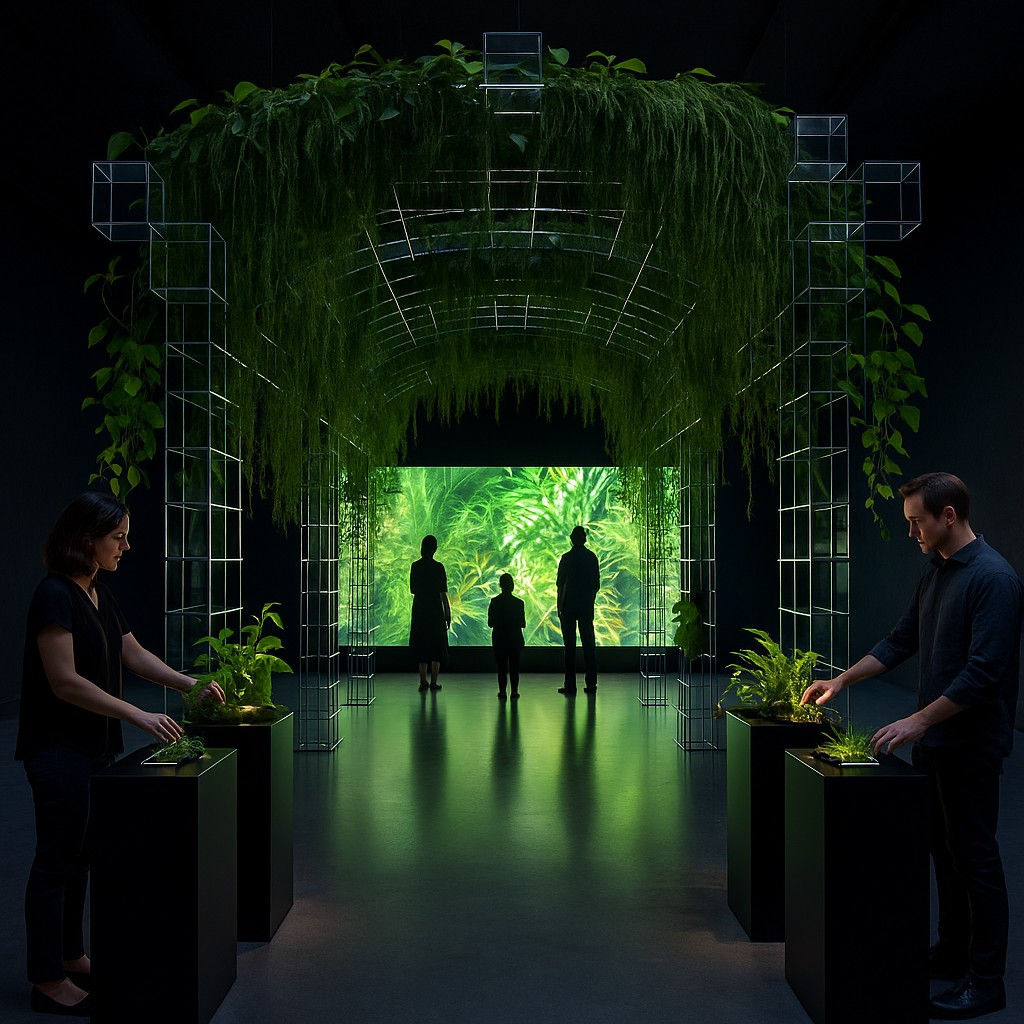
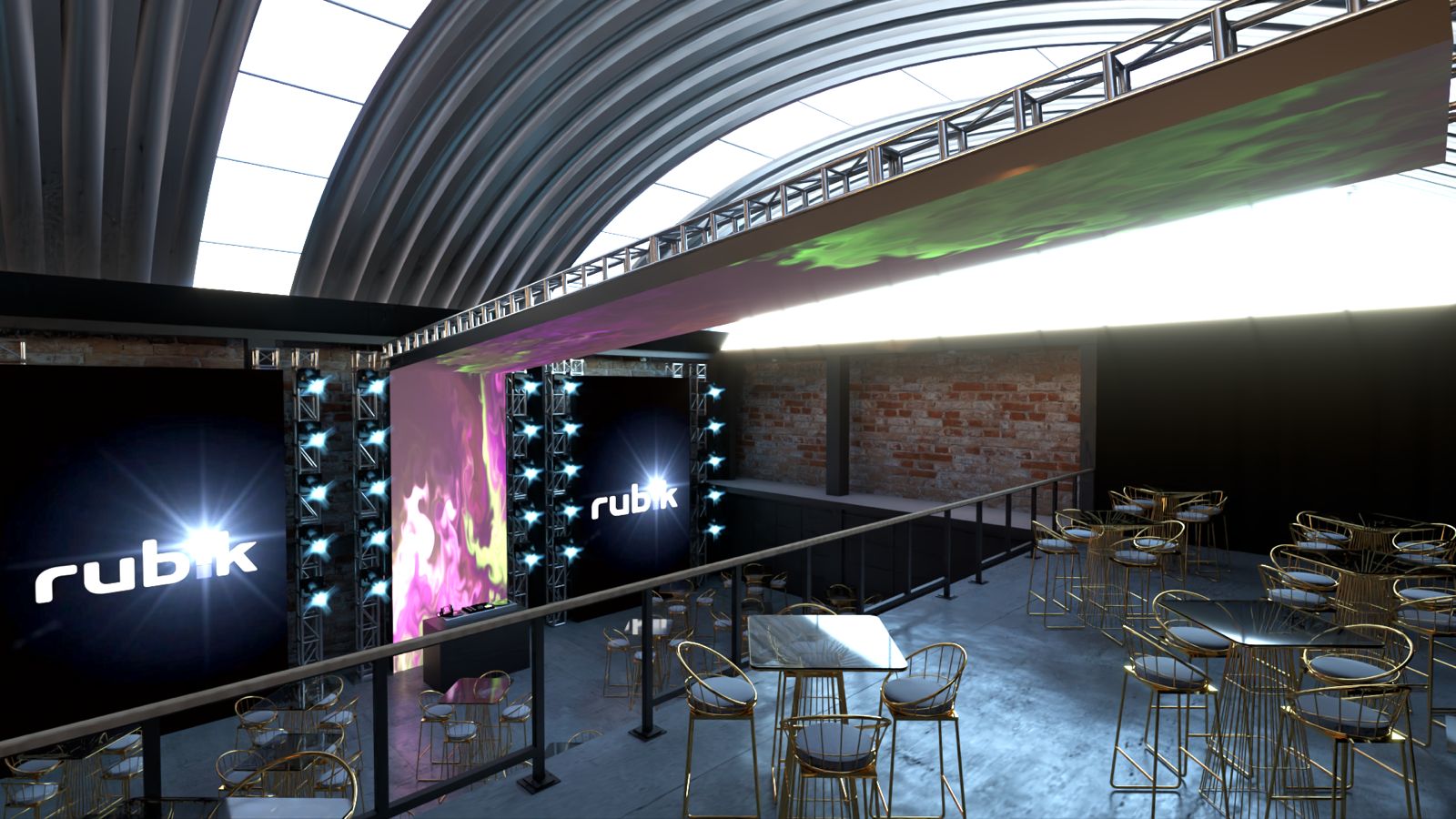
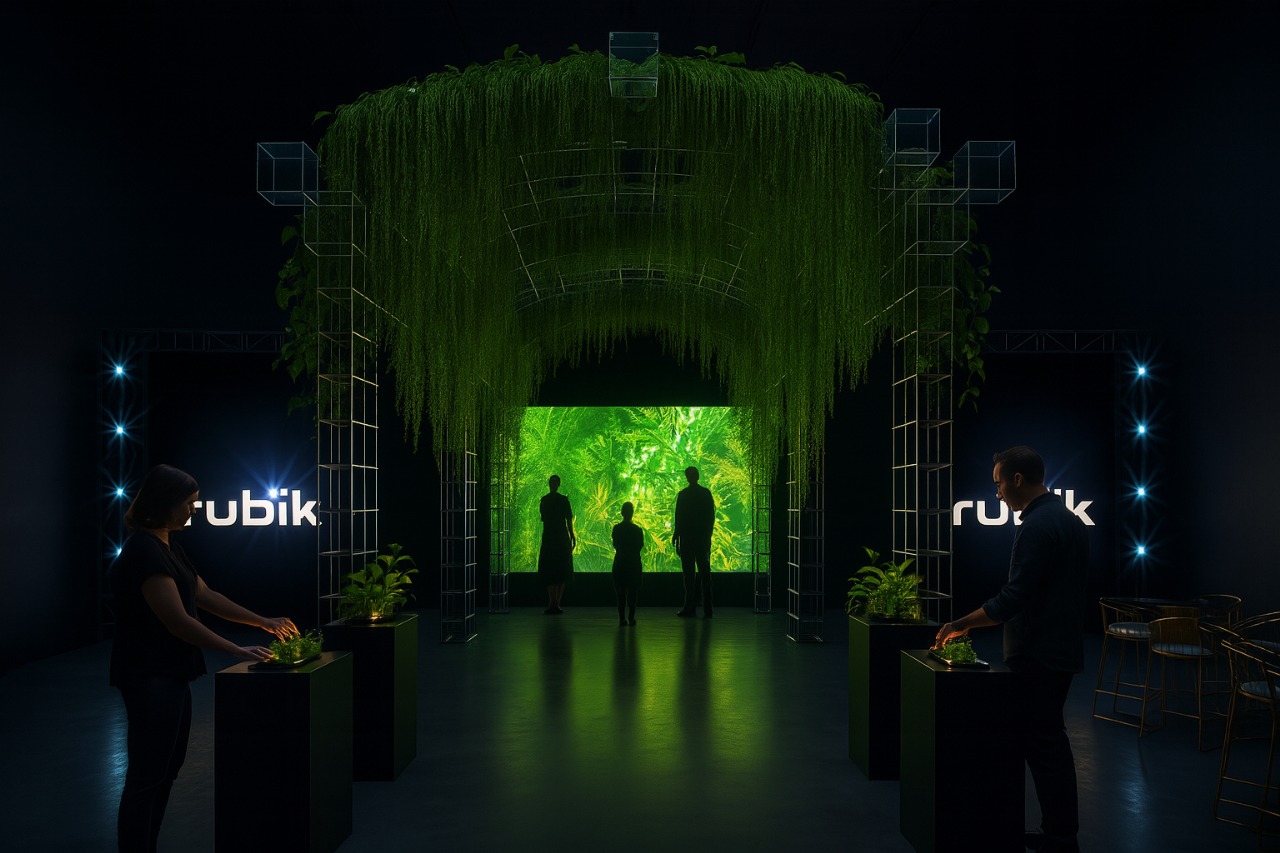
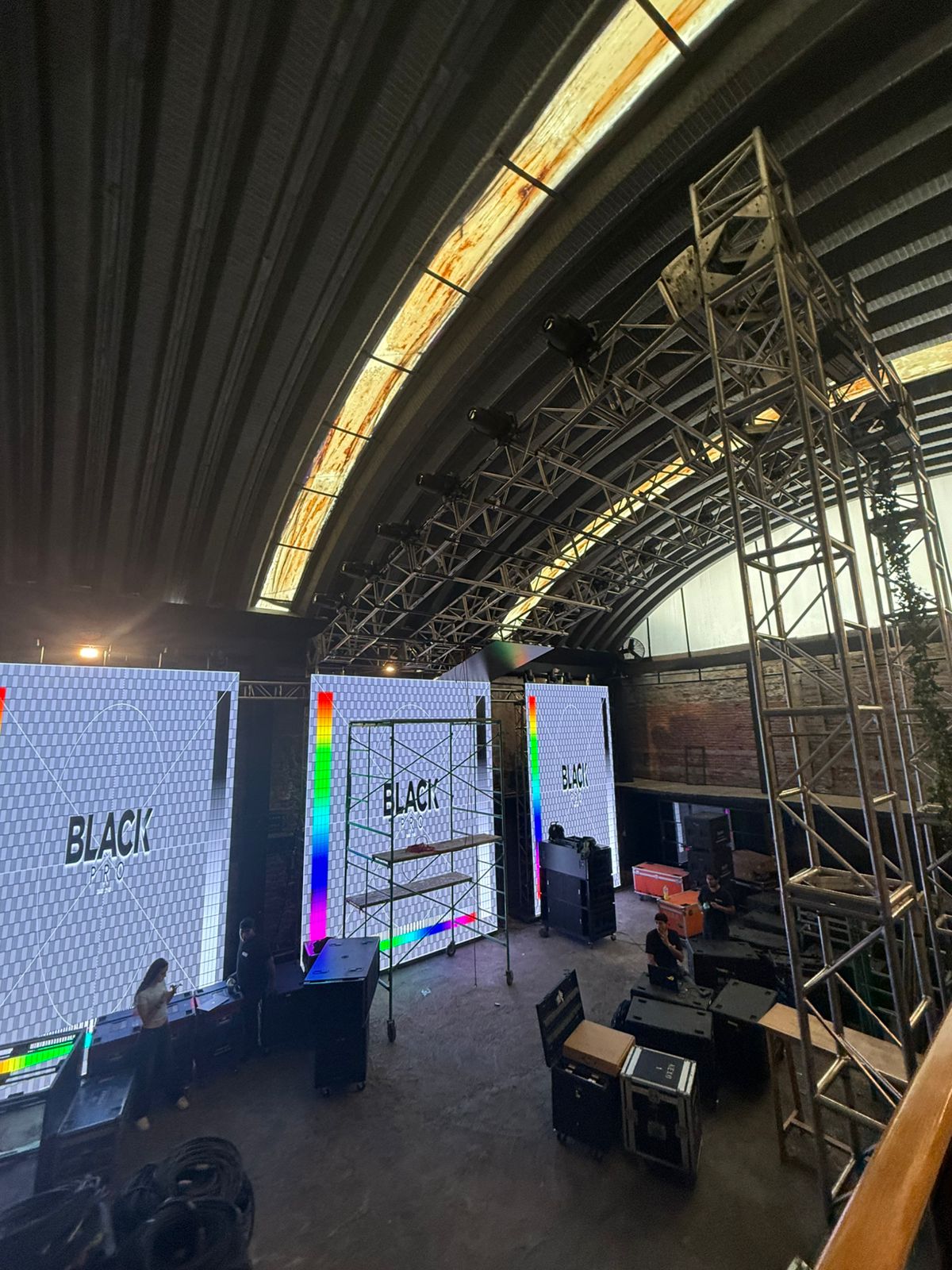
A living, responsive system.
Made by Andata Lab.
- Studio
- Andata Lab
- Disciplines
- Interactive art · Real-time systems
- Engineering
- TouchDesigner · Sensors · Show control
The same real-time stack, other briefs.
Biointerface is an interactive art installation. Related work includes interactive museum exhibits, projection mapping, and permanent hospitality environments that use the same sensing and playback approach.
Have a space that should respond in real time?
We design sensor-driven interactive installations and real-time generative systems for galleries, museums and brands.
Discuss an Interactive Installation →